
The Classroom that Finally Went Quiet

Project Overview
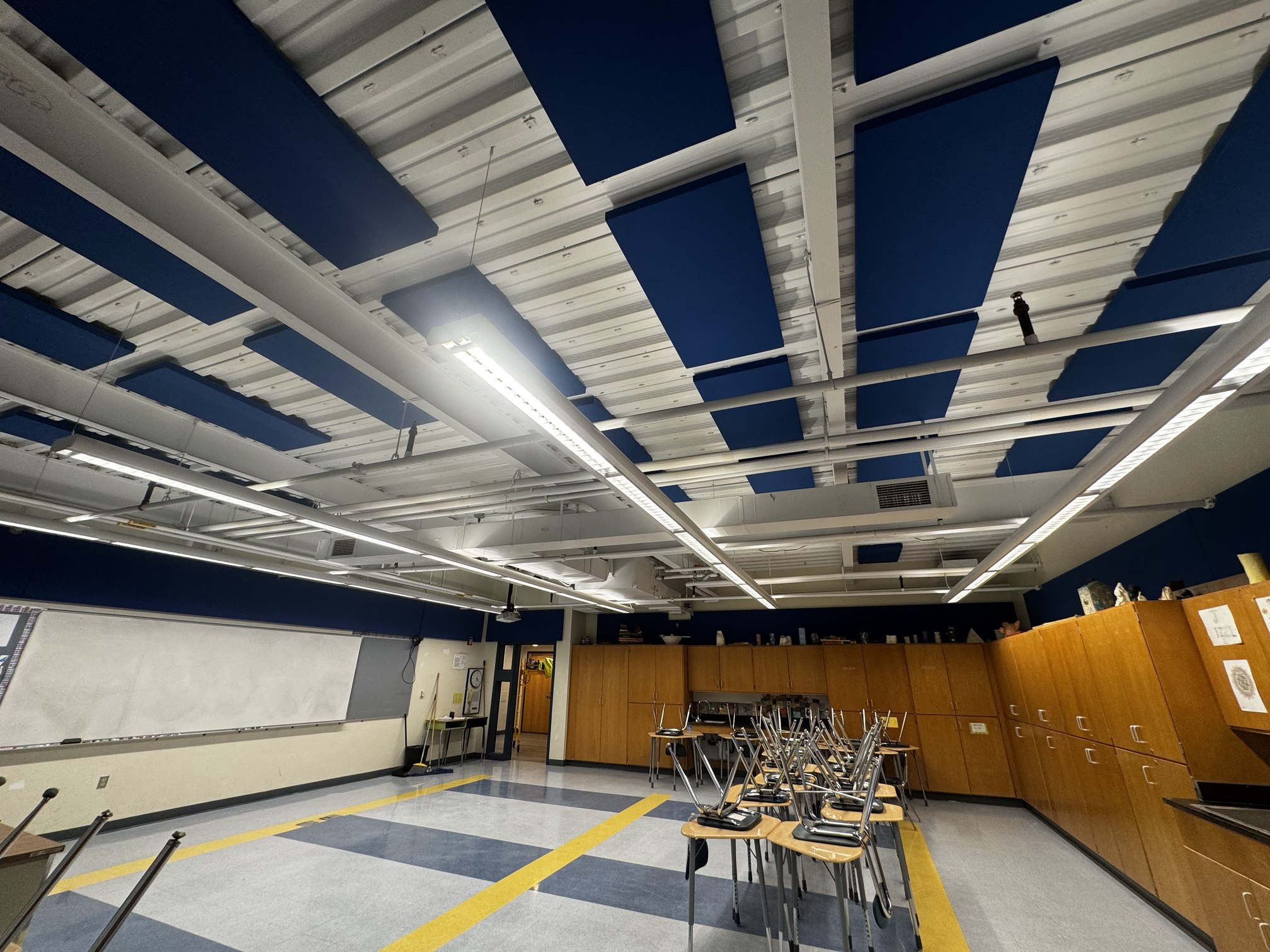
A classroom at Bromfield High School in Harvard, Massachusetts had become difficult to teach and learn in. The room combined a hard floor with a bare corrugated metal deck ceiling, two highly reflective surfaces that gave sound nowhere to go. DDS Acoustical Specialties treated the walls and ceiling with sound-absorbing panels and brought the measured reverberation time down from 3.5 seconds to 1.0 second, a 71% reduction, with overall noise about 5 decibels lower.
The Challenge
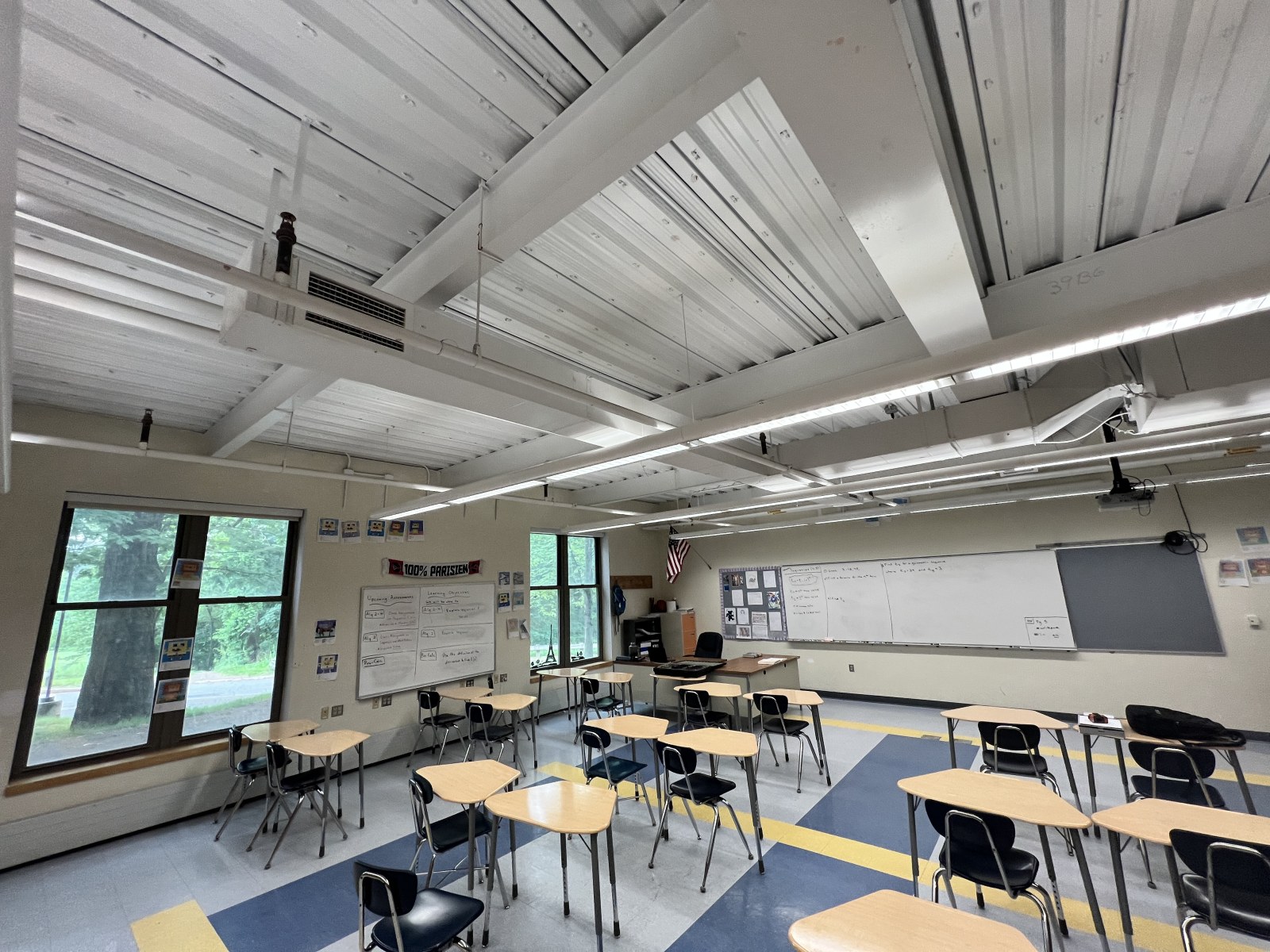
Hard, parallel surfaces are the enemy of clear speech. With a hard floor below and an exposed metal deck ceiling above, sound energy in the room bounced from surface to surface instead of fading. The measured reverberation time was 3.5 seconds, roughly three to four times longer than a classroom should be.
At that level, every word lingered and overlapped the next, blurring speech. Students strained to follow lessons, the teacher raised their voice to compete with the room, and concentration suffered. In a space where clear speech is everything, the acoustics were working against the people in it.
Why reverberation makes a classroom hard to learn in
Reverberation time, or RT60, is how long it takes sound to fade by 60 decibels after the source stops. Lower numbers mean clearer speech, and most classrooms aim for about one second or less. Excess reverberation is one of the most common acoustic problems in classrooms and other learning spaces, and it is exactly what our echo and reverberation reduction work is built to solve.
The project began with an acoustic assessment to measure the existing reverberation time and decide how much absorption the room needed and where to place it.
The Solution
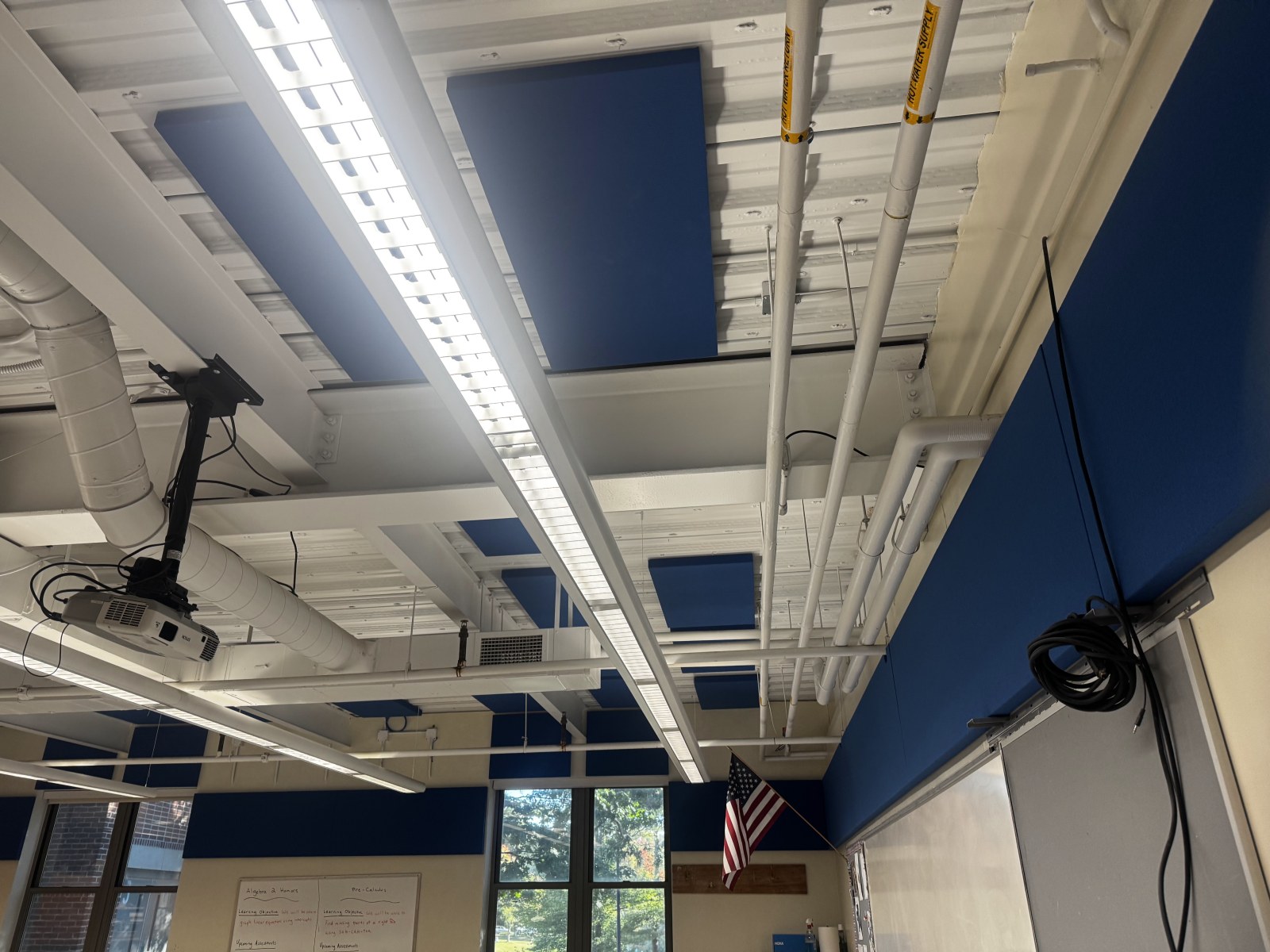
DDS Acoustical Specialties treated both the walls and the ceiling with two-inch fabric-wrapped acoustic panels. Treating more than one surface is what brings a highly reverberant room under control, because it absorbs reflections arriving from every direction rather than from a single plane.
Why two-inch panels?
The panels are a high-density fiberglass core wrapped in an acoustically transparent fabric, built to order in custom sizes and finishes. Panel thickness sets how much sound is absorbed, especially in the lower part of the speech range, so a two-inch depth was chosen for strong, broadband absorption:
- 1/2 inch: NRC 0.65
- 1 inch: NRC 0.80
- 2 inch (used here): NRC 1.15
- 3 inch: NRC 1.20
The panels are Class A fire rated and finished in a durable fabric suited to a busy school.
Installation
The panels were laid out to work around the room's existing lighting and mechanical systems and installed across the upper walls and ceiling, with no disruption to the surfaces below.
The Results
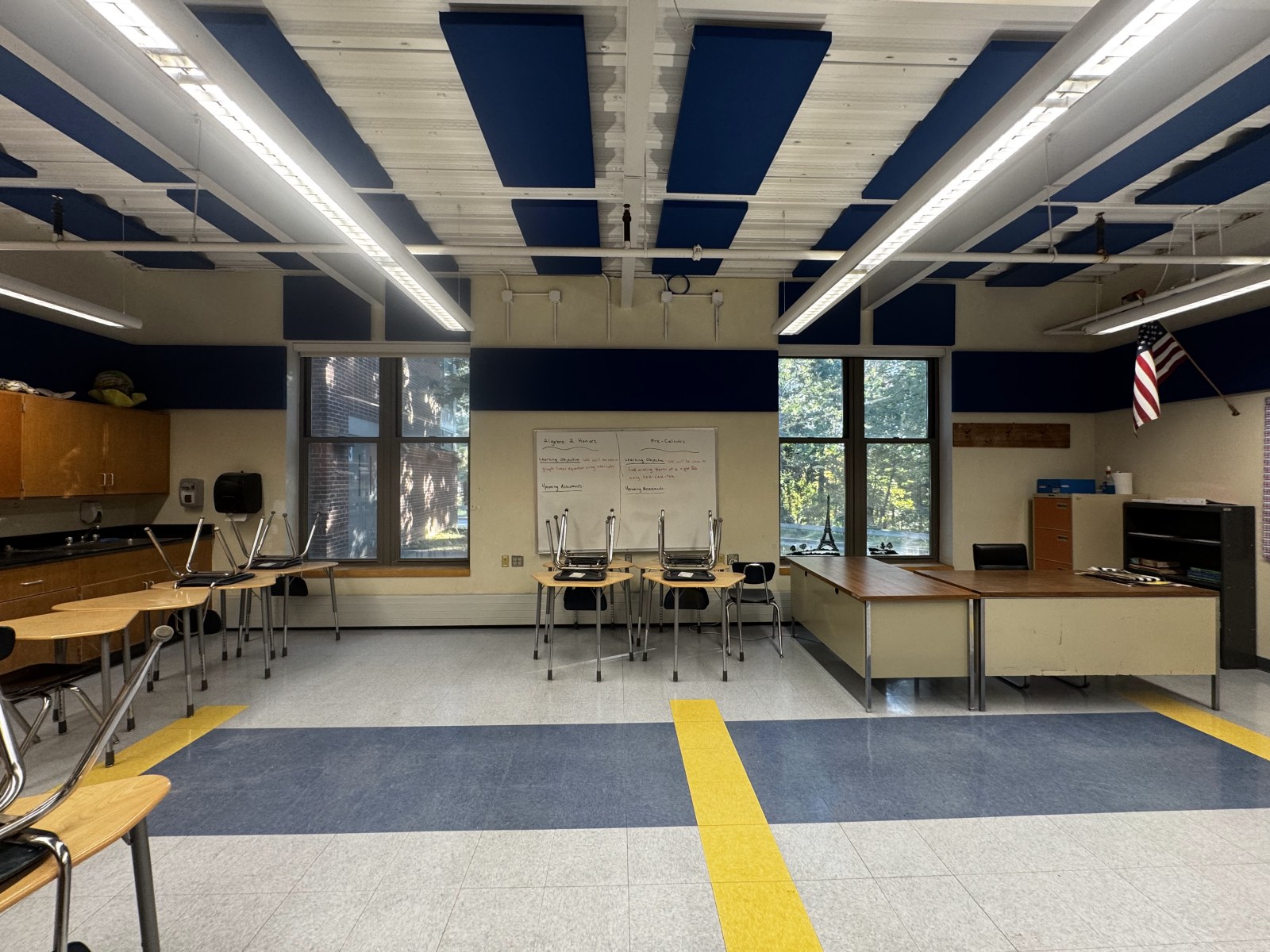
After treatment, the room's reverberation time fell to 1.0 second, a 71% reduction and a level well suited to a classroom. Overall sound levels dropped by about 5 decibels, which the ear hears as roughly a third quieter.
The change is immediate. Voices carry clearly, students can follow a lesson without straining, and the teacher no longer has to work over the room to be heard. The same hard floor and metal ceiling are still there, but the space now supports learning instead of competing with it.
Considering acoustic treatment for your space?
Every room has its own acoustics. You can estimate your own space with our room analysis calculator, see more before-and-after work in our project gallery, or read how we handled a similar school project. When you are ready, DDS Acoustical Specialties will measure your space, model the fix, and handle the installation.