
How to Reduce Office Noise and Improve Speech Privacy

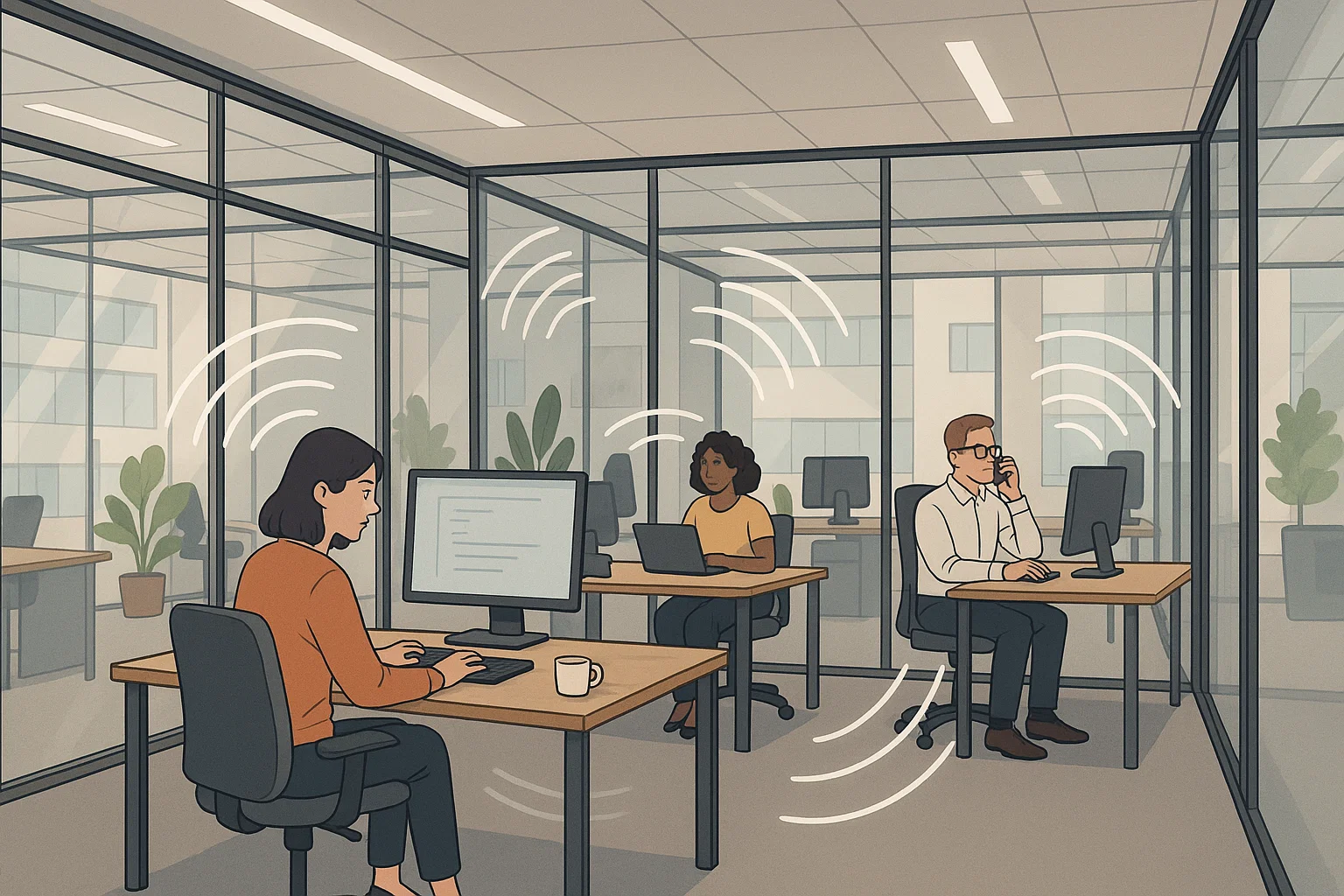
Modern offices are designed for collaboration, but open layouts and shared workspaces often create an unintended problem: noise. From ringing phones to casual conversations, excessive noise reduces productivity, increases stress, and makes private conversations difficult to maintain. Luckily, there are proven strategies and products to control noise and enhance speech privacy in offices.
This guide explores why office acoustics matter, what solutions exist, and how your business can implement them effectively.
Why Office Acoustics Matter
Noise is more than just an annoyance. Studies show that unwanted sound can reduce productivity by as much as 66%. In workplaces, noise can:
- Distract employees and disrupt focus.
- Lower morale and increase stress.
- Compromise confidentiality in healthcare, legal, and financial settings.
- Reduce client confidence in professional meetings.
Speech privacy—the ability to prevent conversations from being overheard—is particularly important in offices where sensitive information is handled.
The Difference Between Soundproofing and Sound Absorption
Before diving into solutions, it’s important to understand the two major categories of acoustical treatment:
- Soundproofing (Blocking): Prevents noise from entering or leaving a space. Examples include acoustical doors, secondary soundproof windows, and wall assemblies with high STC (Sound Transmission Classification) ratings.
- Sound Absorption (Controlling): Improves the sound quality within a space by reducing echo and reverberation. Examples include wall panels, ceiling baffles, and acoustical ceiling tiles. Sound absorbers are rated in NRC (Noise Reduction Coefficient)
Read about the differences between STC and NRC ratings
Common Sources of Office Noise
- Open-plan layouts: Conversations travel without barriers.
- Hard surfaces: Glass, concrete, and drywall reflect sound.
- Office equipment: Printers, HVAC systems, and ringing phones.
- Foot traffic: Hallways and reception areas often carry sound.
Acoustic Solutions for Offices
1. Acoustical Wall Panels
Wall panels absorb sound energy, reducing echo and improving speech clarity. They can be fabric-wrapped, printed with custom designs, or integrated into branding.
2. Ceiling Baffles and Clouds
In large or open spaces, ceiling treatments can drastically reduce reverberation. Suspended baffles or clouds break up sound waves and add a modern aesthetic.
3. Sound Masking Systems
Sound masking introduces a low-level background sound that makes conversations less intelligible to unintended listeners. This is a discreet way to improve speech privacy without structural changes.
4. Acoustical Doors and Seals
Doors are a major weak point in office acoustics. Specialized acoustical doors and perimeter seals can dramatically improve sound isolation between conference rooms and private offices.
5. Secondary Soundproof Windows
Traffic, construction, or HVAC units outside can cause distraction indoors. Installing secondary windows inside existing frames helps reduce exterior noise significantly.
6. Floor Coverings and Acoustic Carpets
Hard flooring amplifies foot traffic and impacts. Acoustic carpeting and underlayment absorb impact noise and contribute to overall sound control.
7. Layout Adjustments
Simple adjustments—like relocating printers, adding plants, or arranging workstations away from noisy areas—can make a noticeable difference.
Benefits of Improved Acoustics in Offices
- Increased productivity and focus.
- Enhanced employee satisfaction and reduced stress.
- Improved confidentiality for client discussions.
- A more professional and welcoming atmosphere.
- Compliance with HIPAA, FERPA, and other privacy regulations.
Steps to Implement Acoustic Solutions
- Assess the space: Identify noise sources and problem areas.
- Work with a professional: Acoustic consultants can provide modeling and recommendations.
- Choose the right products: Select solutions based on goals (absorption vs. blocking).
- Install strategically: Combine multiple treatments for the best results.
- Evaluate and adjust: Measure improvements and make refinements.
Cost Considerations for Office Noise Control
The cost of acoustic improvements depends on:
- Size of the space.
- Type of products used.
- Installation complexity.
Rule of thumb: Start with the biggest noise contributors (ceilings and walls), then add targeted solutions like doors, windows, and sound masking.
Why Work with DDS Acoustical Specialties
DDS Acoustical Specialties provides turnkey acoustic solutions for offices of all sizes. From wall panels and ceiling treatments to sound masking and custom installations, we help businesses improve focus, comfort, and confidentiality. Whether you need a single conference room treated or a full office build-out, our team can provide the right solution.
Conclusion
Reducing office noise and improving speech privacy isn’t just about comfort—it’s about creating a more productive, professional, and confidential environment for your employees and clients. With the right blend of acoustic solutions, any office can transform from noisy and distracting to quiet and focused.