
Executive Office Acoustics: Lenze America, Uxbridge, MA

From the conference room to the corner office
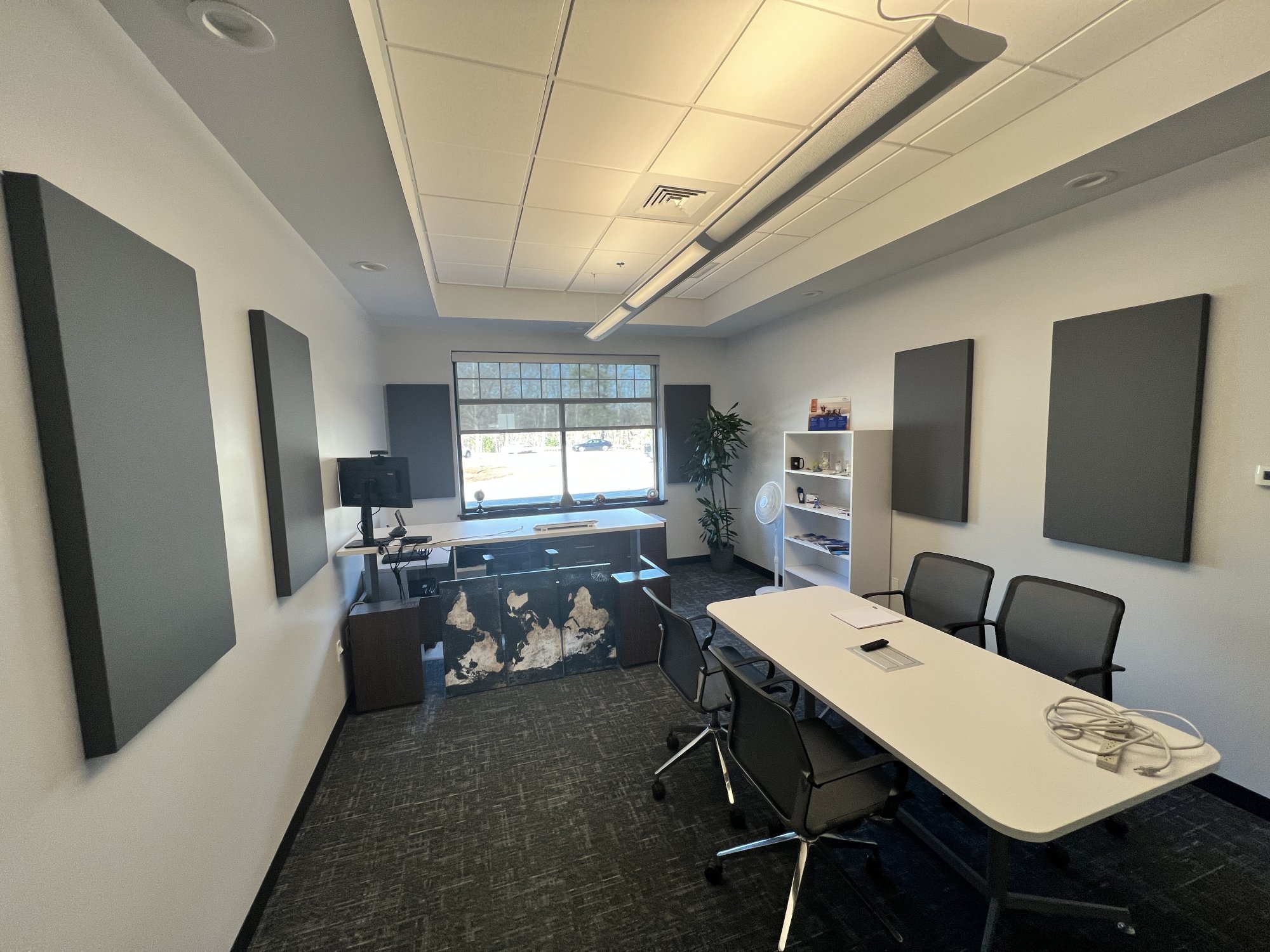
When Lenze America wanted two of its executive offices to sound better, it already knew who to call. The global motion-control and automation company had DDS Acoustical Specialties treat a conference room at its Uxbridge, Massachusetts site, liked the result, and asked us to bring the same fix to the offices where its leaders spend the day: the CFO's office and the Operations office.
We treated both rooms with twenty two-inch fabric-wrapped acoustic panels, ten in each office and about 156 square feet in all. The measured reverberation time fell from 1.85 seconds to about 0.84 seconds, a drop of roughly 55 percent, and the panels were finished in a fabric matched to the ones already in the conference room.
A sleek office that rang on every call
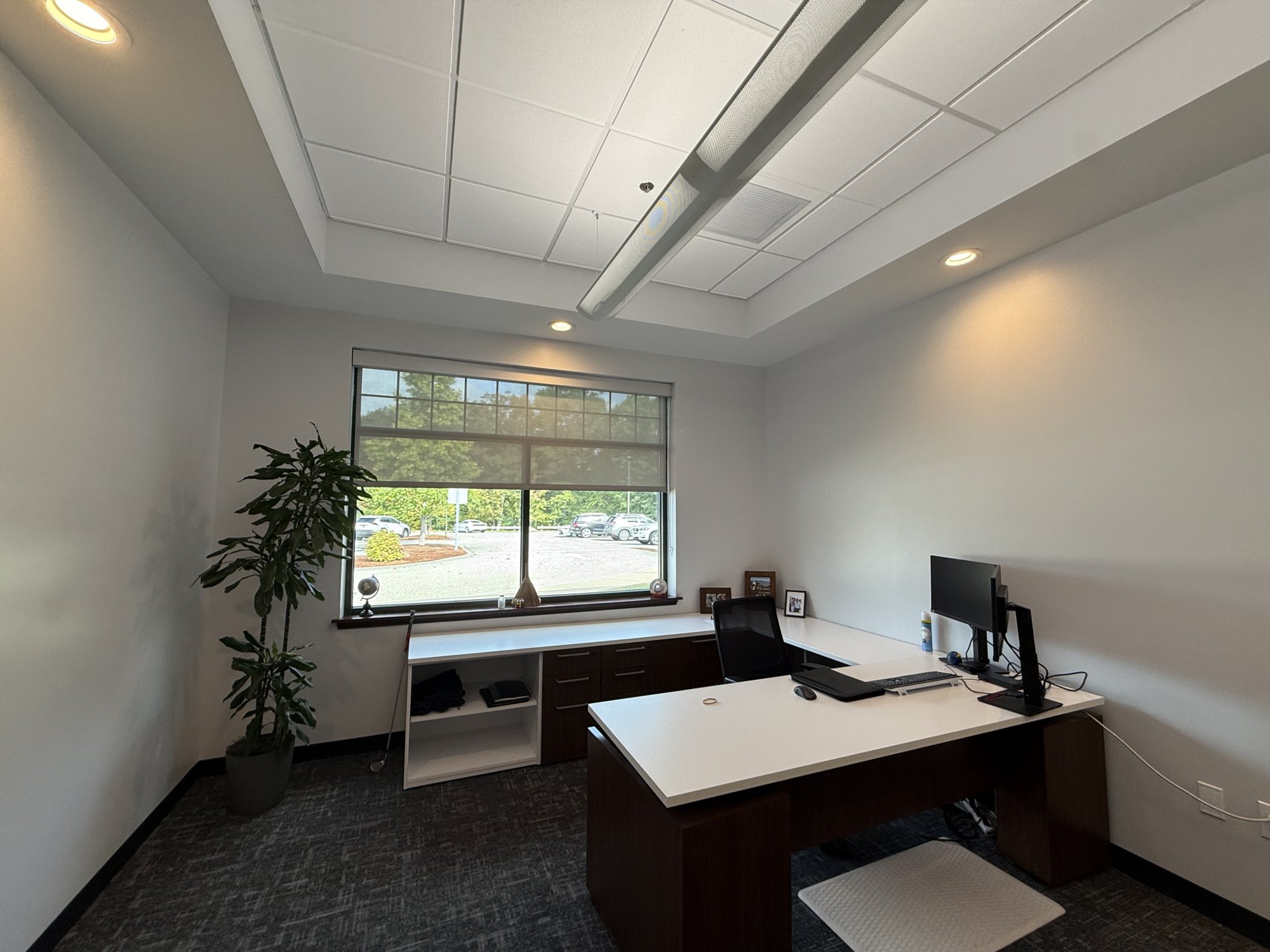
Both offices were finished to a high standard: a wall of glass, painted drywall, and thin carpet over a hard floor. Those are handsome, modern surfaces, and every one of them reflects sound rather than absorbing it. With almost nothing soft in the room, speech bounced from wall to wall instead of fading.
The measured reverberation time was 1.85 seconds. In a small, hard room, that shows up as a hollow ring on phone and video calls and a subtle strain in ordinary conversation. These are rooms where a lot of the day is spent talking, one on one and on camera, so clear sound is not a luxury, it is the point.
Why a hard, bright room is tiring to talk in
Reverberation time, or RT60, is how long a sound takes to fade away once its source stops, measured as a drop of 60 decibels. The lower the number, the clearer speech sounds. Private offices and meeting rooms generally aim for about 0.8 second or less. These offices measured 1.85 seconds, more than double that.
At that level, each word arrives with a faint tail of the word before it. On a call it muddies the microphone, and in person it makes people lean in and repeat themselves. Bringing the reverberation down is one of the most direct ways to cut echo and settle a room, and it is exactly what these offices needed.
Soft surfaces, spread around each office
DDS Acoustical Specialties measured and modeled each room, then gave it what it was missing: wall surfaces that absorb sound instead of throwing it back. We installed two-inch fabric-wrapped acoustic panels, mounted flat on the walls and distributed evenly around each office.
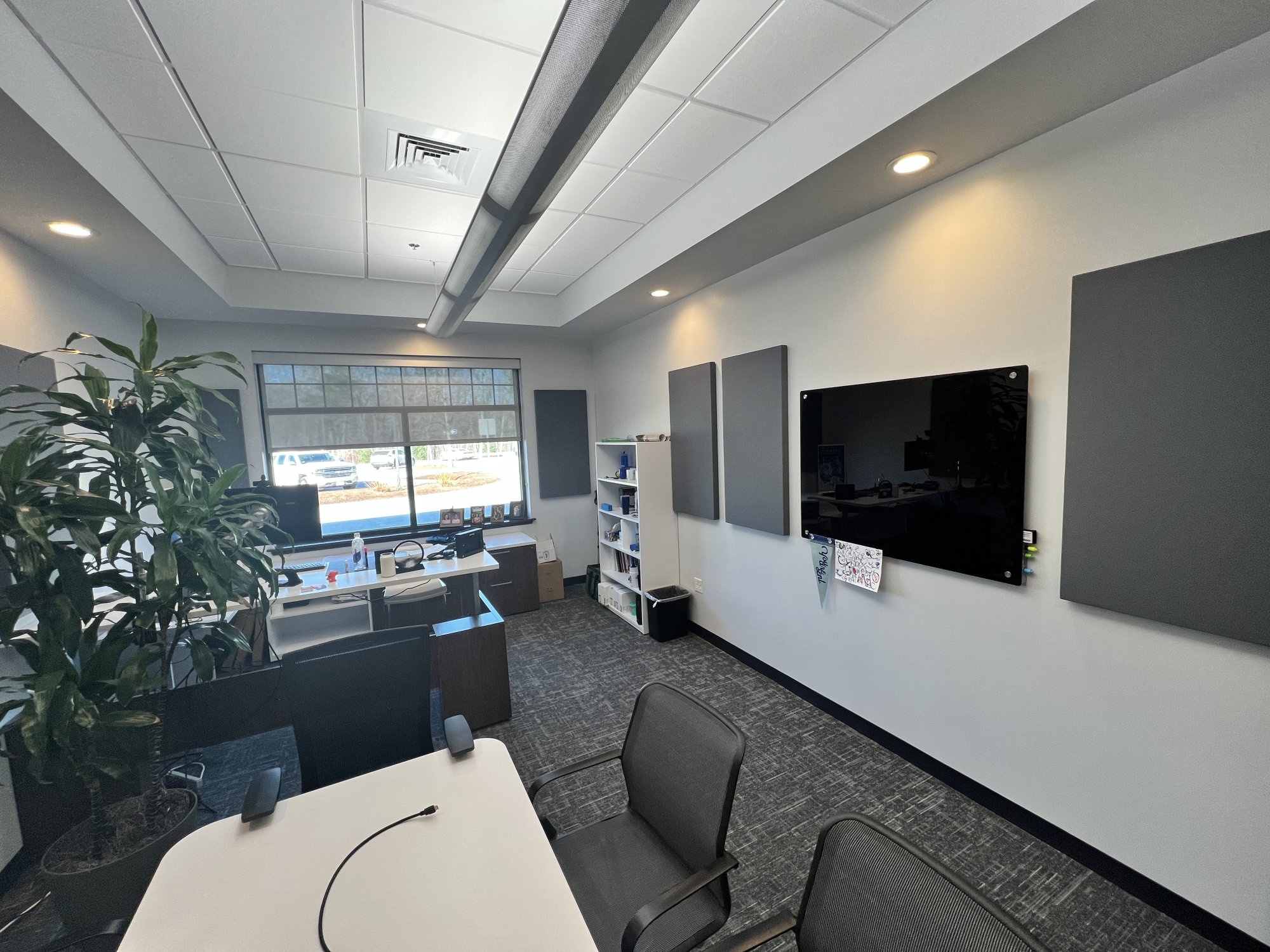
Spreading the panels out, rather than clustering them on one wall, catches reflections coming from every direction, which is what actually settles a hard room. Twenty panels went up in all, ten in the CFO's office and ten in the Operations office. In the CFO's office the panels were arranged around a wall-mounted display, and the fabric color was matched to the conference-room panels so the offices read as intentional, not treated.
A closer look at the panels
The panels use a high-density fiberglass core finished in an acoustically transparent fabric. They absorb mid and high frequency reflections, tame reverberation, and are built to order in custom sizes, shapes, and finishes. They are Class A fire rated, available from one half inch to four inches thick, and reach an NRC as high as 1.20 in the deepest builds.
Lenze America's offices used two-inch panels, which carry an NRC of 1.15 and absorb energy across the full range of the speaking voice. Because the fabric comes in hundreds of colors, the panels could be matched to the ones already on site, so the two new offices look like they were always meant to have them.
In and out in a single visit
This was a tidy job, and it stayed that way. The panels mount flat to the wall on clips, so our crew hung all twenty across both offices in a single visit, worked around the existing desks and displays, and left the rooms clean and back in use the same day. No construction, no dust, and no time lost for the people who work there.
Sharper calls, quieter offices
After treatment, reverberation in the offices dropped to about 0.84 seconds, a 55 percent reduction and right in the range a private office should hit. Overall sound levels came down by roughly 3 decibels, a clearly noticeable drop to the ear.
The rooms look almost the same. The glass, the desks, and the clean lines are all still there. What changed is how they sound: voices stay put instead of ringing, calls come across clearer on both ends, and a day full of meetings is easier on the people having them. It is the same result Lenze heard in the conference room, now in the offices where the work gets done.
Make your next call sound better
DDS Acoustical Specialties designs and installs acoustic treatments that make rooms easier to hear, meet, and work in. From private offices and conference rooms to gymnasiums, restaurants, and houses of worship, we measure the problem, model the result, and handle the installation.
You can estimate your own space with our room analysis calculator, browse more finished work in the project gallery, or see how we quieted a very different room in our case study on a noisy childcare playroom in Framingham.